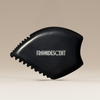
The Original Stone

The Bian Stone Gua Sha
The Bian Stone Gua Sha
砭石 — The Original Stone of Chinese MedicineCarved from authentic Bian Shi (砭石), the most revered therapeutic stone in classical Chinese medicine — a sculpting and drainage ritual built for skin that demands more than surface-level care.
65 million years of thermal intelligence.Bian stone was here before acupuncture. Classical texts place it at the head of the five major medical techniques — a scraping and pressing practice used to move stagnant qi and restore circulation before metal tools existed.
10 minutes in your hands.Upon friction with skin, Bian Shi generates measurable far-infrared waves and ultrasonic pulses — two therapeutic modalities with documented relevance to circulation, cellular activity, and fascial release. No other gua sha material does this.
Free shipping on orders over $60 · Ships within 2 business days
A ritual for skin that holds tension, puffiness, and age.
More than 30% of the body's lymph nodes are located in the head and neck — the highest-density drainage territory in the body.
Facial puffiness and fluid retention
You wake with a puffy face, swollen undereyes, or a sense of facial heaviness. Lymphatic stagnation in the head and neck is the usual culprit. The gua sha's scraping motion directly addresses this by encouraging interstitial fluid movement.
Jaw tension, facial tightness, and stress-held muscles
Clinical research confirms gua sha reduces facial muscle stiffness — oscillation frequency and dynamic stiffness both decrease measurably with consistent practice. Less tension. More defined structure.
Dull skin and sluggish circulation
Mechanical stimulation from gua sha increases microcirculation, delivering oxygen and nutrients to skin cells directly during the practice. Glow builds with consistency.
Loss of facial definition over time
Fascial mobilization through instrument-assisted soft tissue therapy has well-established effects on tissue definition and tone. The results compound with daily use.
A skincare practice that moves slow actives deeper
The mechanical action of gua sha drives botanical actives deeper into the dermis during active tissue stimulation — a delivery mechanism no serum alone achieves.
A grounding, intentional daily ritual
Ten minutes of focused gua sha is one of the most accessible tools for managing the stress response — and cortisol is a direct antagonist of skin clarity and tone.
✦Not rose quartz. Not jade. The original.✦
Most gua sha tools are decorative objects. Bian stone is a therapeutic instrument.
Jade and rose quartz are beautiful. They are also inert. Bian Shi generates measurable physical effects upon contact with skin.
Property 01
Far-Infrared Emission
Measurable Thermal Depth
Mineralogical analysis measured Sibin bian-stone's far-infrared radiation power at 0.923 in the 8–14 μm spectral zone — among the highest recorded for any natural stone material.
Property 02
Ultrasonic Pulse Activity
Therapeutic Frequency Range
Testing attributed to the State Seismological Bureau Institute of Physics found that rubbing Sibin bian-stone against the body generates thousands of ultrasonic pulses in the therapeutic frequency range — a physical property not found in jade, quartz, or other commonly used gua sha materials.
Centuries of practice. One specific stone.
Classical medical traditions did not choose Bian stone for its appearance. They chose it for what it does.
Classical texts place Bian stone therapy at the head of the five major medical techniques — above acupuncture, above moxibustion.
Classical Chinese MedicineGua sha originated in China over two thousand years ago, and Bian stone was there first. Used to stimulate meridians and move stagnant qi before metal tools existed, Bian Shi (砭石) was the original instrument of Chinese bodywork.
Bian Shi is a microcrystalline limestone sourced exclusively from the Sibin region of Shandong, China, the only place on earth where it forms. Its composition is the result of a cosmic event approximately 65 million years ago. It carries more than 40 trace minerals including strontium, titanium, chromium, manganese, zinc, calcium, and iron, among others.
65 Million Years Ago
A cosmic event forms the unique microcrystalline limestone deposit in Shandong's Sibin region.
2,000+ Years Ago
Bian stone therapy is documented in classical Chinese medical texts as one of the five major medical techniques, used to stimulate meridians and restore circulation. It predates metal acupuncture needles.
Modern Research
Mineralogical analysis at the Chinese Academy of Sciences measures Sibin bian-stone's far-infrared radiation power at 0.923 in the 8–14 μm range — among the highest recorded for any natural stone material.
2025
A randomized controlled trial in the Journal of Cosmetic Dermatology confirms statistically significant reductions in facial muscle stiffness after eight weeks of regular gua sha practice, validating what classical medicine documented centuries earlier.
What Sets This Apart
Authentic Bian Shi — not decorative stone marketed as therapeutic
The gua sha market is full of rose quartz and jade tools sold on aesthetic grounds. Both are inert materials. Authentic Bian Shi (砭石) is sourced exclusively from the Sibin region of Shandong, China — the only location on earth where it forms. Each piece is hand-cut and unique; no two are identical.
Measurable physical properties no other natural stone material produces
Far-infrared emission at 0.923 in the 8–14 μm range. Thousands of ultrasonic pulses in the therapeutic frequency range upon friction with skin. Documented by mineralogical analysis at the Chinese Academy of Sciences and physical testing by the State Seismological Bureau.
Designed to work in a ritual system, not as a standalone tool
The Bian Shi Gua Sha was paired with the Herbalist's Elixir Brightening Facial Oil from the start. The mechanical action of the stone drives the Elixir's botanical actives deeper into the dermis during active tissue stimulation — a delivery mechanism no serum alone achieves.
Grounded in research, not trend
A 2025 randomized controlled trial in the Journal of Cosmetic Dermatology found eight weeks of regular gua sha practice produced statistically significant reductions in facial muscle stiffness — oscillation frequency decreasing by 2.02 Hz, dynamic stiffness reducing by 56.46 N/m.
The Herbalist's Elixir meets Bian Shi.
Apply the oil. Work the stone. Complete the lymphatic circuit. 10 minutes. Morning or evening.

What you want to know before you buy.
The Full Frondescent ecosystem.
The Bian Stone Gua Sha sits at the intersection of TCM meridian theory and measurable lymphatic physiology. These products are designed to work with it.
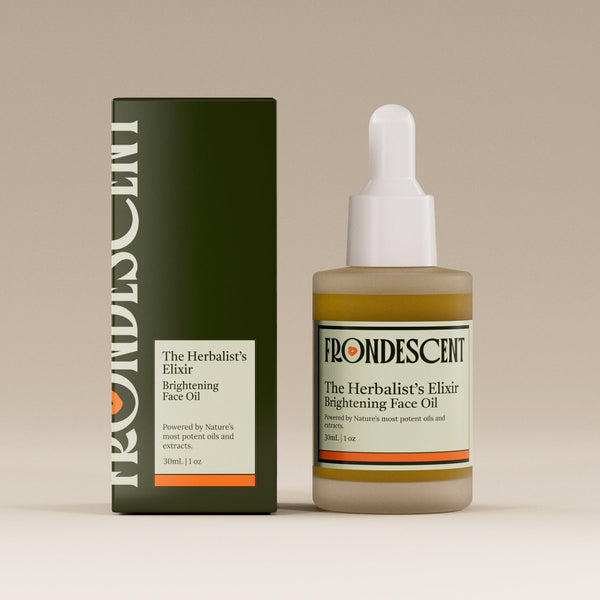
The Herbalist’s Elixir Brightening Facial Oil
The oil this stone was designed to work with.
From $48.00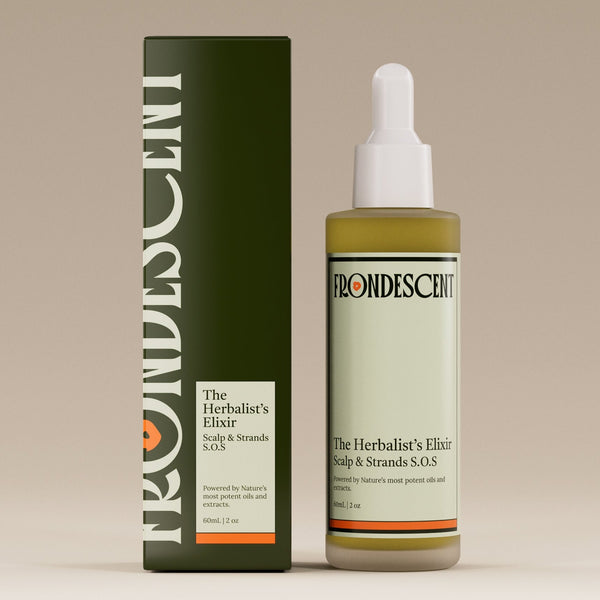
The Herbalist's Elixir Scalp & Strands S.O.S
The ritual extends to the scalp.
From $64.00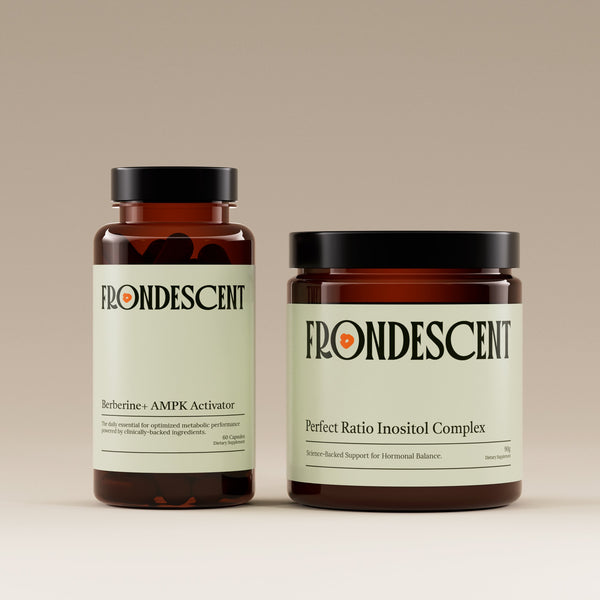
The Golden Sequence: Berberine & Inositol Supplement Stack
What begins on the surface starts inside.
From $68.00